
1. Introduction
In electronic packaging and semiconductor manufacturing processes, gold plating is widely used in applications such as chip pin plating, lead frame plating, printed circuit board plating, and connector plating. The quality of the gold plating layer directly determines the electrical conductivity, oxidation resistance, solderability, and long-term reliability of electronic components. The compositional stability of the gold plating solution is the fundamental guarantee for the quality of the plated layer.
Gold plating solutions for electronic packaging are typically based on sodium gold sulfite or potassium gold cyanide systems. In addition to the precise control of the Au⁺ concentration in the main salt, the accumulation of trace impurity elements in the plating solution can severely affect the purity, density, and adhesion of the coating. Once impurities exceed the specified limits, this directly leads to peeling, dullness, increased porosity of the coating, and even the scrapping of entire batches of products.
2. Application of TXRF Technology in Gold Plating Solution Analysis
Traditional analytical methods such as atomic absorption spectrometry and inductively coupled plasma optical emission spectrometry, although relatively high in accuracy, have limitations including complex sample pretreatment, long analysis cycles, and high operating costs, making it difficult to meet the high-frequency inspection demands of production lines. The TX3300 total reflection X-ray fluorescence spectrometer provides an efficient solution for rapid, multi-element simultaneous analysis of gold plating solutions used in electronic packaging.
Here is the English translation:

Significant Advantages of the TX3300 Total Reflection X-ray Fluorescence Spectrometer:
(1)Extremely Simple Sample Pretreatment
Traditional methods require strong acid digestion of the gold plating solution, which involves cumbersome procedures and carries a high risk of introducing contamination. In contrast, the TX3300 only requires dropping a minute amount of the gold plating solution onto a glass slide. After drying, the sample is ready for measurement—no digestion is needed, greatly reducing sample preparation time.
(2)Simultaneous Multi-Element Rapid Analysis
The instrument can simultaneously detect nearly 30 elements, covering both the main salt element (Au) and trace impurities (Fe, Ni, Cu, Co, etc.) in the gold plating solution. A single measurement takes only about 2 minutes, enabling rapid acquisition of multi-element concentration data and significantly improving inspection efficiency.
(3)Detection Limit Down to ppb Level
The total reflection geometric design effectively eliminates background scattering from the substrate, resulting in a substantially improved signal-to-noise ratio and achieving detection limits at the ppb (μg/L) level. This advantage allows the TX3300 to accurately capture extremely low concentrations of harmful impurity elements in the plating solution, providing a reliable basis for product quality control.
(4) Environmentally Friendly and Low Operating Cost
The system eliminates the need for strong acid digestants and expensive high-purity gases, producing almost no chemical waste. Its operating and maintenance costs are far lower than those of ICP-based equipment.
(5) Easy to Operate and Flexible to Deploy
With its compact design, the TX3300 can be flexibly deployed in laboratories, alongside production lines, or in mobile testing vehicles. Its one-click intelligent operation enables quick mastery without requiring a professional background.
3. Application Case
An electronic packaging company requires regular monitoring of the concentrations of Au as well as impurity elements such as Fe, Ni, Cu, and Co in its gold plating solution.
In this test, an enrichment-based measurement method was employed to analyze the gold plating solution from the production line. The pretreatment procedure effectively enhanced the detection sensitivity for trace elements, ensuring accurate quantification of low-concentration impurity elements.
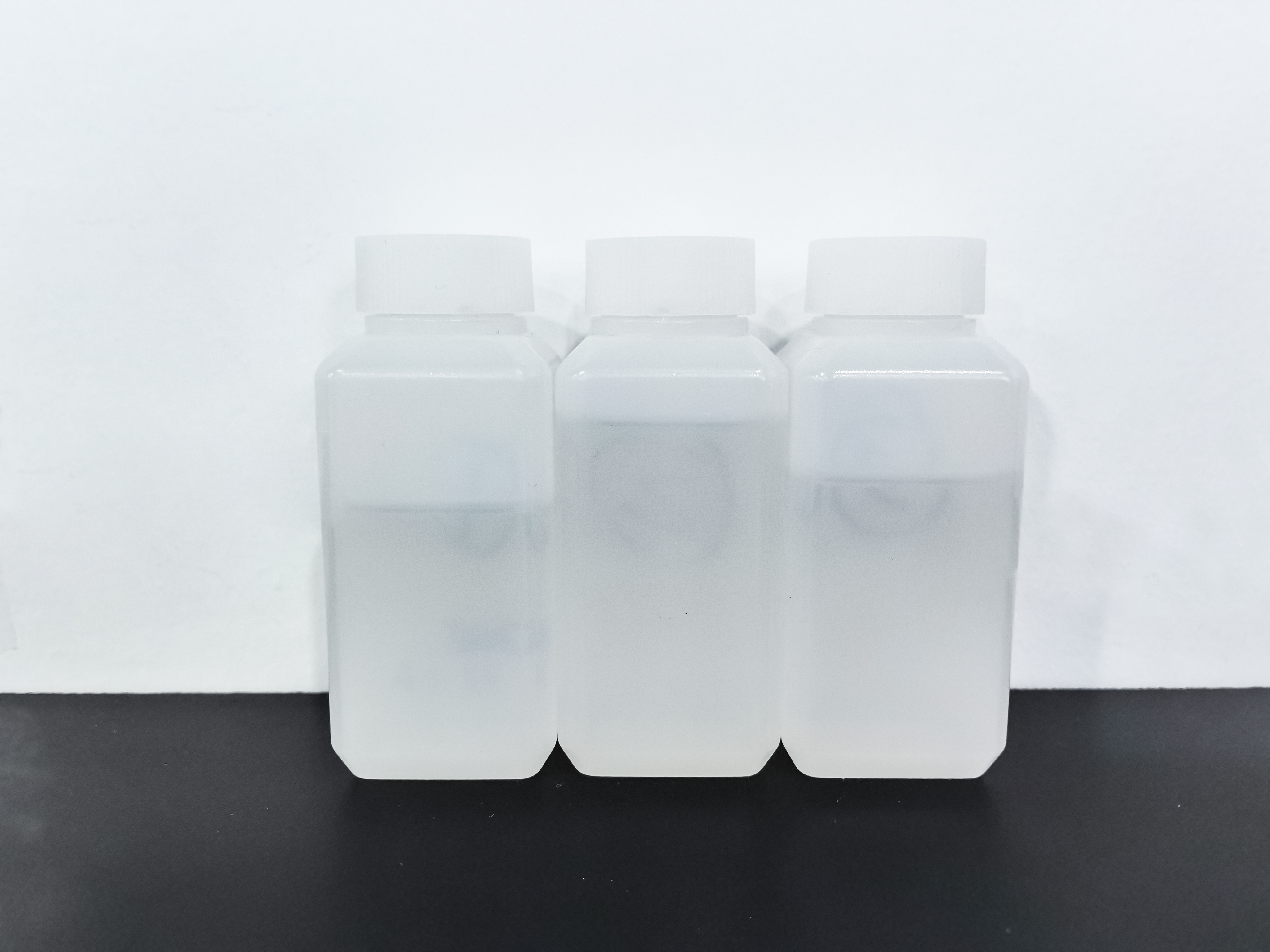
Sample image:
Test results:

Test conclusion:
The average value of gold (Au) obtained from 10 repeated measurements was 0.9875 ppm, with a relative deviation from the standard value of 0.952 ppm falling within the allowable error range, thereby validating the reliability of the test results.
4. Conclusion
With its ppb-level detection limit, the TX3300 accurately meets the stringent control requirements for trace impurity elements in gold plating solutions within the electronic packaging industry. It requires no complex pretreatment, is easy to operate, and significantly reduces the dependence on specialized operator skills, making it a reliable tool for quality monitoring of gold plating solutions in electronic packaging enterprises. Furthermore, this technology can be further extended to applications such as monitoring gold plating wastewater discharge, analyzing bath aging, and tracing process anomalies, thereby providing ongoing technical support for green manufacturing and sustainable development in the electronic packaging industry.